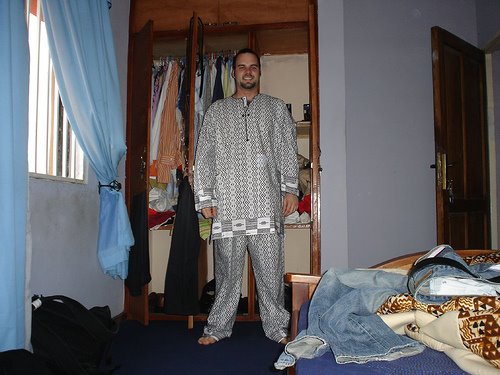
I introduce Simon Mcintyre, Colleague, complexity consultant and all round authentic soul. This is his comments after his first visit to Lagos in July 2006. The comments were emailed to colleagues in Equality Foundation, UK but with his kind permission I share it with all of you who extend your goodwill by visiting with me in this here blog.
Hi all
Having been back just over a week now I’ve had a bit more time to reflect on my Nigerian experiences and at Adewale’s recommendation I’ve decided to try to put them down in words, what I have learned, what I experienced and some of the incidents and situations I was in along the way. It’s by no means a complete travel diary (which would probably be rather dull) but should give everyone a good idea of what it was like
The flight was uneventful beyond the number of people who came to say hello to Ade both at check-in and on the flight itself showing that either it is a small world or that he knows a lot of people. Looking back on it I think it’s a combination of the two but it was certainly an interesting experience to see Adewale interacting with different people and to be introduced to a myriad of people from different backgrounds and who all do different things.
We were met outside the airport by Hakeem (Adewale’s Brother) and Andrew our driver and a mobile-police armed escort. The mobile police were to give me my first experience of the difference between exercising authority and power in Lagos, an issue which seems to run deeply throughout business and society.
The drive from the airport was both as I had expected and not, one of the main things was that it wasn’t very sunny, being rainy season it was overcast and even raining as we drove through the city out to the house in Leki, it sounds silly but when you’re in somewhere with expected 30 degree heat you expect it to be sunny! The traffic and driving however was pretty much as I has been led to believe, Ade and a few other people I met throughout the week have said that the closest thing in Europe to a Nigerian is a Italian and the similarities are certainly there.
The traffic and people’s driving was what caused the incident with the police escort, whilst weaving through the traffic another vehicle lightly hit ours (no real damage done though), which set the escorting policeman to chase him and try to pull him over. Despite the policeman being armed the van didn’t pull over which resulted in the policeman shooting his weapon into the air and forcing the van to the side of the road. This was about 15 minutes into being out of the airport, I guess some would say “welcome to Lagos” but I perhaps perversely found it a fascinating insight not into the country or the city but into the dynamics of power and human interaction. What was most interesting was the reaction of the young policeman who was riding with us, who couldn’t see why his colleague was reacting like that. After the incident was over we talked to our policeman who showed incredible insight into why the incident had happened, as he pointed out once you have fired your weapon where else do you have to go and why should you have to do that in the first place, what are you really doing showing your authority or really exercising your power for the sake of it? It was a quite fascinating conversation from someone who seemed to have a real insight into these issues, which belied his years and what some would see as his low position.
The company that we are working with over there is A3&O Media, an offshoot of A3&O which is a very successful company specialising in connectivity solutions for businesses. A3&O media itself began life as a provider of premium SMS services, that is text messaging services that cost more than your standard rate (like the voting texts for TV programmes like pop idol or Big Brother in the UK), but has moved into a couple of other areas and currently has a position somewhere between a technology based advertising broker and a provider of information services via innovative and new technologies.
I spent the first afternoon there talking to April, who is the nominal head of A3&O Media, although really is the head of marketing and being introduced to everyone there. It was clear just from my initial introduction that the organisation had issues that are perhaps not that dissimilar to our own, failing to execute on agreed actions, delays in launching products and services and a culture that prefers the tactical to the strategic.
I spent the next 2 days sitting in on meetings, talking to the staff and watching how the organisation worked. One of the main issues within the organisation was that difference between the exercise of authority and the exercise of power and how Wale the owner of the company used the two and more importantly how the staff let him use them in the ways they wanted. Observing A3&O Media and having talked to a number of other people it seems to me that this is an issue across the country (or certainly across businesses in Nigeria with even foreign businesses such as Ericsson having similar issues), particularly in the area of continuous improvement and letting people make mistakes and learn from them. The real issue is that of relationships, how do staff see the relationship between the organisation and themselves, between their boss and themselves and most importantly between each other. This is an area in which we can use our own expertise to help organisations figure this out, Omoluwabi in particular can help and this is what we are doing with A3&O, introducing them to Omoluwabi and empowering the staff to develop an organisation that is fit for purpose rather than have it designed for them, if you remember our own meeting around Omoluwabi this is looking at the dynamics first rather than at the structure.
Around the middle of the week, A3&O learnt that a new service for the Nigerian National lottery which was due to be launched the following weekend had been moved to be launched that weekend instead. I was then drawn in to helping them make it work, working with each of the teams to ensure everything was in place that needed to be and that it all launched without a hitch (in the end there were many hitches but not all of them were A3&O’s responsibility!). This was an extremely interesting experience, and taught me a lot. My initial approach tended towards doing all the thinking for them, telling them the solutions to their problems and in effect just becoming Wale for them (one of the issues with their dynamics is that Wale solves all the problems and tells everyone exactly what to do). What had in effect happened was that I had been pulled into the existing dynamics of the organisation and they were using me in the same way they were used to in just 3 days! Interestingly enough, until it was pointed out to me what I was doing I hadn’t even realised it, and I think this is one of the most important learning points for me from the whole Nigerian experience, the fact that you have to step back sometimes and watch what is happening through different eyes, looking for the patterns of behaviour that are destructive and non productive and working on how to change them. This is something I will be trying to do all the time now, not just for myself but also for others, I think its important to realise that just because someone is doing something or has a particular dynamic doesn’t mean they know that they are or that they have it.
From then on I took a much more facilitative approach, making the staff take control of meetings and brainstorming sessions, intervening only when it was necessary and helping them to build their own capacity. This was strengthened by a half day Omoluwabi workshop led by Adewale and the change in the organisation and the people within it was almost immediate. They went from disorganisation and a total lack of teamwork, planning and purpose to a group of people who understood their goals and objectives and the value each of them could bring to each other regardless of their own area of expertise. The concern was obviously that once we left they would default back to type and that is why we have agreed with Wale to continue working with them over the next year and for me to visit once a month with an agreed delivery plan of workshops and actions. The real purpose of our interventions with them is to make them independent and able to function on their own with their own system of operation that suits their unique environment. What is most interesting is the fact that there are many Nigerian companies facing exactly the same issues and the default approach is to find a scape goat, and sack staff, not to look at the system and examine it for its own failings.
So that was my experiences of the work side of things, what about the actual environment itself. This is the difficult bit to put into words, what did I see is easy (I could write pages of pure description, but that would be quite dull and give no really insight into the place) but what did I feel and how would I describe Nigeria I find far more difficult.
I think the main point is that everything seems to have its place, yes there is an enormous gap between rich and poor (in-fact I think the real gap is between the middle and working classes there) so whether you would call that rich I don’t know, but at the same time the lower classes are not totally jobless or starving (although there are obviously homeless and the total poor) but I think (but have no figures to back it up) that they are a minority and as a percentage of an enormous population are probably no larger than a so called first world country.
My other observation is that it is a place with great energy and immense possibilities and a capability to energise you, although I should add that my views are only representative of Lagos, which I was told many times is not Nigeria. The “can do” and “will do” attitude that everyone seems to have is infectious and truly energising, I found myself feeling totally re-vitalised in a way I haven’t felt for a long time. I think one of the reasons was being released from the existing dynamics of home and Equality Foundation and setting totally new ones. However as well as experiencing the energy there is also the opposite, the phrase a place of great contrasts but in a totally different context to the normal rich poor split. At the same time as being full of energy, Lagos is relaxed, the people are at the same time hectic and laid back, you have to experience it to really understand it but as well as being the busiest I have been in some time there I was also probably the most relaxed as well.
Which begs the question why can’t we establish this balance at EFL why can’t we be busy, and focused but relaxed with it and why are we defined by our existing dynamics, and find them so hard to change? As I have already said the change in A3&O was immense in a short time but we have been talking about change at EFL for even longer and can’t seem to sustain it. This is something that we must work-out not just for ourselves but to enable us to close the loop for clients too. I personally am trying very hard to keep that energy level up, to stay energised and focused on the strategic and the future not at the expense of the present but rather not bogged down in it.
I’m sure there was much more that I should have shared, perhaps some examples of the ease at which contacts are made (for example our chance meeting with the Nigerian Minister for Information in a restaurant) or the resilience of the people to adversity such as constant power shortages and generally poor infrastructure but the ability to achieve and innovate nonetheless, something that I think we have lost in the UK because we no longer have to (everything is on a plate for us), or maybe the human dynamics of the Ajadi family but perhaps that will be for another email or to describe in another trip. In a nutshell Nigeria was an eye opening experience for me both to the possibilities there and to the possibilities within myself. I think I learnt a lot there both relevant to our work and in particular human and organisational dynamics and probably more important I learnt a lot about myself and how I currently operate and can operate. I think that’s one of the reasons I’ve struggled to describe Nigeria when I’ve talked to people about it, because I’ve really been looking for the words to describe the effect it had on me but choosing words to describe the place itself and therefore failing. I’m really glad to be going back every month and hope I can share everything that is going on there and with me, with you guys back at home and if I don’t please let me know. Feel free to ask any questions or to clarify anything
Regards
Simon
Wednesday, July 26, 2006
Simon on Lagos, Africa

Sunday, June 18, 2006
Character is destiny Part 1 'Of Fathers and Manhood'
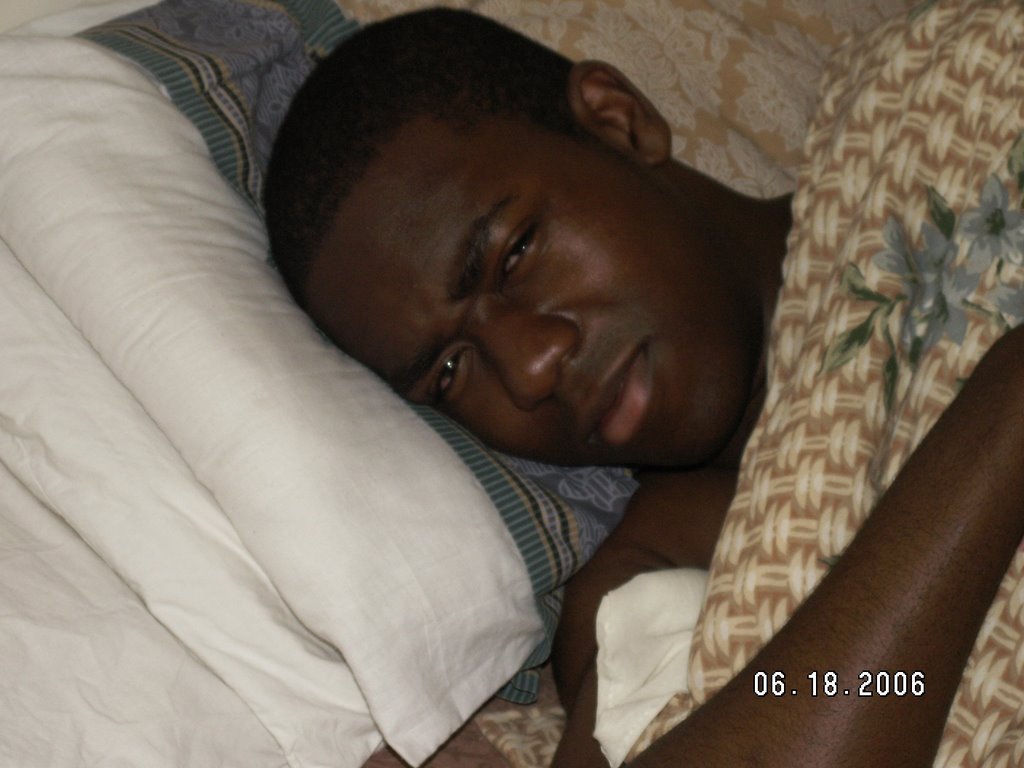

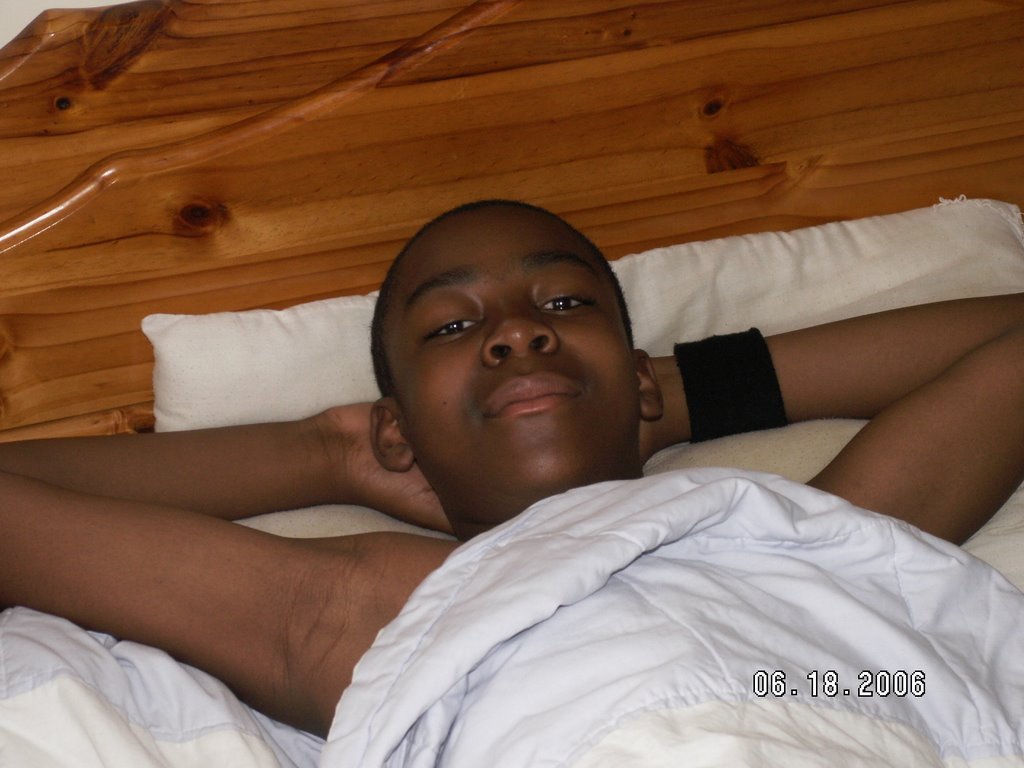
" Old friend, can I trust you to look after my eyes so they can see the future"
Emperor Tewodros II in Act 1 of Abyssinia
by Adewale Ajadi
I am not a great fan of Fathers day but it provides an opportunity to talk of the greatest love of all the joy of fatherhood. Much maligned, underated and frankly greatly misunderstood. All over the world men are in different stages of confusion as their roles are being redrafted by emergent changes in the world we live in but the assumption of their power means they are the last to either be consulted or involved.
I am a father of three, they are respectively my spirit Amioluwa, my heart Ifeoluwatari and my brain Olaiya. I am one of five brothers the only girl somehow the alien in the land of testostorone. My father who for extra effect had many half siblings but is one of two brothers. I have always seen the essential qualities of manhood and understood the power when it is fully realised. Unlike women a male can live to be a century and never become a man there is nothing in his biology or his psychology that automatically triggers the necessary transformation. In fact I think one of the best definition of a man is in one of Walter Mosleys book where Easy Rawlins says ' A man takes responsibilities wherever he finds it'. I have been blessed to be a descendant of men who lived this ethic to perfection. My own father Muritala Aderogba was an exemplary Patriach who provided for and looked after a household of over 50 people, extended family most likely in their hundreds and beneficiaries dotted over the landscape of Ibadan and Nigeria. I used to think for much of my life that he wielded power with too much ease but I now know better. I realise that compared to the power he had, his use of it was entirely facilitative. He was an authority who only appeared to be authoritarian to get results. In the end he died too soon because of his role. Carrying the weight of invulnerability and providing so well it became an entitlement to all recievers especially myself. Caring with such ease that for those who lived of the energy it was like breathing you only notice when the oxygen is endangered. He stood in a longline of providers, protectors and procreators all the way from my granfather Ajadi to the Kiniun Onibudo hinself Balogun Ibikunle.
I have lived in the gaps between their footfalls seeking their wisdom and challenging their choices in a time when the three Ps are no longer the exclusive preserve of the male. In all corners of the world the now formalised presence of women in the labour market (Always been the case in Africa), the single rearing of children by women households, the substantial as well as wellcome redefinition of the female role is an everyday reality. Whilst the everday treatment of women is still unjust there has been a total diruption of the assumption of the male role. The question is what does it take to become a man this days?
I thought I had been prepared for this challenge by the partnership of my parents. I was sure I was ready for it because the openess of my heart. In any event that I was schooled into it by the skills of my trade. I have watched how the male pathologies that are ever present devour many of my sex. The violence that is present in all our transactions, lurking and waiting just beneath the surface. Society in its pretence holds its nose and punishes it as a babaric exposition of the unacceptable while rewarding it if we use it to their direction. The lust that precipates from the pores of our hormones, ridiculed in its honesty and reduced to craven perversity only explored under labels, license and control. A lie that we all tell but a desire that gets rewarded married or not. So I struggle to be whole with myself the Paternal, pimp and pastor.Unlike those before me I cannot work my issues without the refrees crying foul. In the end aged 38 I nearly gave in to the confusion and the compassion I was earlier than my father and was about to sign off.
Around me children stand tall like the Iroko showing six packs and booty well before life demands it. Many facsimile of fathers blown away by confusion, compulsion oe share complacency. They rise schildren of Amazon's showing their grasp of masculinity in bump and grind. rebelling at any sign of male authority with visceral hatred. Trapped and threatened the male is now a caricature cowered by sanctimonous outrage and castrated by compassionate streotypes of underachievement. The working class, the black male and any other whose power is yet unconfirmed is quickly boxed lest he might not conform. So now is that all there is to manhood?
I look at the other brothers that life has brought my way the pimp father 11 kids and counting fighting CSA and holding on to his soul to be dad to everyone. He is alone in his battle but was never the opressor. His partners equally ciulpable and excitable, one of him split into many little pieces pussycats fighting for the same ball of thread. The big egungun himself, powerful presence of compassion, a gentle giant exposed for resources and maligned for fidelity in a world that refuses to reward the desire to make a difference. No romance without finance. They are numerous the pastor in the flat longing for his kids and wondering why he is considered immature for expressing his passion for life. The coach in his tracks running ten miles to push away the pain of incessant demands. They all are parts of these times when the eternal battle between male and female has been redefined but somehow the rules keep changing. So they rage for certainty of the past, bombs in rucksack, knifes in playgrounds and bitches or Hos on mixtapes. In the nursery school they sit in at lunch, in primary they are suspended and secondary excluded eventually incacerated. What does it mean to be a man today?
I celebrate the female in me so i can see clearly and engage in successful battles. I fight not to win because if I do i lose. I cannot allow her to win because if she does the it is lost. I must just learn to become a worth adversary without violence and managing my libido but not become impotent.I must evolve everyday so that those who stand next to me can trace my steps and see something to move us forward. We must continue to do battle so that we evolve together or if one sides persishes then all is lost. To be a man today I am responsible for everything I do both good and bad. To be a man for tomorrow I must find what evolves my soul so it shines through my choices. To be a man for all times I must move beyond the certainty of one role and adapt to the ever changing possibilities of my environment. When I become a man then eventually I can look back to satisfy my destiny as a father.
Dedicated to my three teachers, Olaiya, Ifeoluwatari, Amioluwa. Wake up its time to rise.
Sunday, June 11, 2006
Ijala Omoluwabi

Ijala Omoluwabi
I spew forth without blemish
The son of the most evolved
My eyes a revelation of lava within
My prey the order of the other
It is my truth to speak
My destiny to live
I am out here
I wash my eyes in the waters of Oshogbo
It tells me the subterfuge of their genome
But my gourd I cracked in deliverance
I did not listen to Ibikunle’s vision and omens
I slept through Amana’s frenetic heretic
Fortune, I retain the mirrors of Malaika
I am still out here
I am naked all my medicine corrupted
I search for my machete but the steel is corroded
The trees shed their Oro fruit so I cannot starve
The grass wove their skin to cover my staff
Rainfalls from the eyes of the sky that assuage my thirst
My voice rekindled in the roar of thunder
They are out there
In time, he visits to reclaim all
The universe gradually consumes the mall
Randomly she strips away security
Replacing each layer with sensual clarity
All we have lived is vanity
What is left standing is humanity
Are you out there?
Thursday, June 01, 2006
Wednesday, May 03, 2006
Omoluwabi

Omoluwabi “ Business excellence the Nigerian way”
Whilst the media and most commentators are enthralled with the antics of the Nigerian political classes as to whether there will be a third term or not, we as business people can ill afford such distractions. Since this is just an outline let me just mention one reason, the Nigerian population under the age of 15 stands at over 40% and our population keeps growing at just below 3%. This means to achieve any appreciable change in poverty the economy has to grow at least at 6%. We need to generate the economic expansion and job creation that will deliver these critical goals. This is not going to come from government even though they are critical for creating the enabling environment. It is also not going to come exclusively from oil or any other extractive industry because the market is too fickle, its expansion opportunities are too minimal. It can be a catalyst at best. The saving grace for our economy, our prosperity and the future of our children are going to be in the Small businesses across the land. It is the growth and transition of ‘mama put’ and market women, the expansion of the mechanic and the Alaba market trader. It is the transition from an informal sector to formal, from owner manager to small employer and finally to the broad spectrum of medium sized employers with up to 50 employees that will be the engine room for the economy. I know I can hear your Amen.
The challenge to achieving this much-needed expansion is that we are a low trust economy with a high transaction cost . There is very limited investment in Small and Medium size businesses as a result. Put simply, because we have little trust in each other, the cost of doing business is extremely high at the same time as there is refusal to take risk through investment. I do not suggest that there is no basis for this suspicion but it leads people to demand upfront payment in some cases two years ahead tying up much needed liquidity. If we want this growth then we need to change it. My fundamental position is that our social capital is low because the Nigerian character has been eroded into one value, conspicuous consumption. It acts as a masquerade for rampant mediocrity. Our character is inevitably our brand and it is synonymous with fraud, corruption and aggression. Everything is pursued on the short term with the sole purpose being quick financial reward. My answer to this is to develop a matrix and standard for character that we need in order to succeed individually, institutionally as well as nationally. Far more importantly we need it to sustain success. My choice is the concept of Omoluwabi.
Omoluwabi is Oyo Yoruba for ‘ Omo ti Olu Iwa bi’ its literal English is the offspring or child of the Lord of character. It is part of an ancient code in the same way that most noble Japanese were raised on Bushido. However it was never just linked to birth but a manifestation of values, attitude and behaviour. It is in the same way that Unbuntu is emerging as a model of progressive and ethical business conduct in South Africa and also being used across the world is the same way that Omoluwabi will offer a much needed standard for excellence in the Nigerian character. It should be our contribution to Management philosophy and Leadership thinking across the world. I hasten to add that what I offer is Omoluwabi for the 21st Century freed from the confines of its Yoruba origin and projected into the service of a Nigerian Transformation as well as an African Renaissance.
© Adewale Ajadi for Adaptnomics Ltd Page 1 3/5/06
There are seven elements or components emerge from my attempt to update Omoluwabi. Description, methods and practices indicators underpin each of them. They are the following:
1. Isiju: Illusions or distractions. They are mainly borrowed industrial philosophy that oversimplifies reality for the sake of efficiency without any real consideration for their effectiveness.
2. Oju Inu: Insight or trained intuition. This is critical to self evaluation and evolution of consciousness
3. Ami: Symbols and omens. This is about analysis and recognition of pattern as well as revelation.
4. Iwalewa: Character is beauty. The behaviours that reflect your values and beliefs
5. Eniyan lasomi: People are my clothing: The primacy of relationship in all human affairs and system
6. Afose: From word into action. The essence of continuous improvement especially the effective execution of words into action.
7. Ire : The blessings and prosperity that are result of values, behaviour and accountability
In summary we have reached a time when our battle is that of ideas. The most pressing idea is about indigenous business models that will lead to growth and success. I submit to you the concept and matrix of Omoluwabi offers at least the same level of possibility that you will get from any MBA programme. On the other hand it could be a more viable alternative. Either way the book that captures this dynamic process will be my humble contribution towards creating a competitive, sustainable and prosperous Nigeria. It will help create an economy that is the pride of Africa, envy of the world and a bastion of commercial excellence in its character and business results. It will achieve all of this without selling its soul. As entrepreneurs we should recognise this as an opportunity too important to ignore.
© Adewale Ajadi for Adaptnomics Ltd Page 2 3/5/06
Thursday, March 30, 2006
Complexity Course update
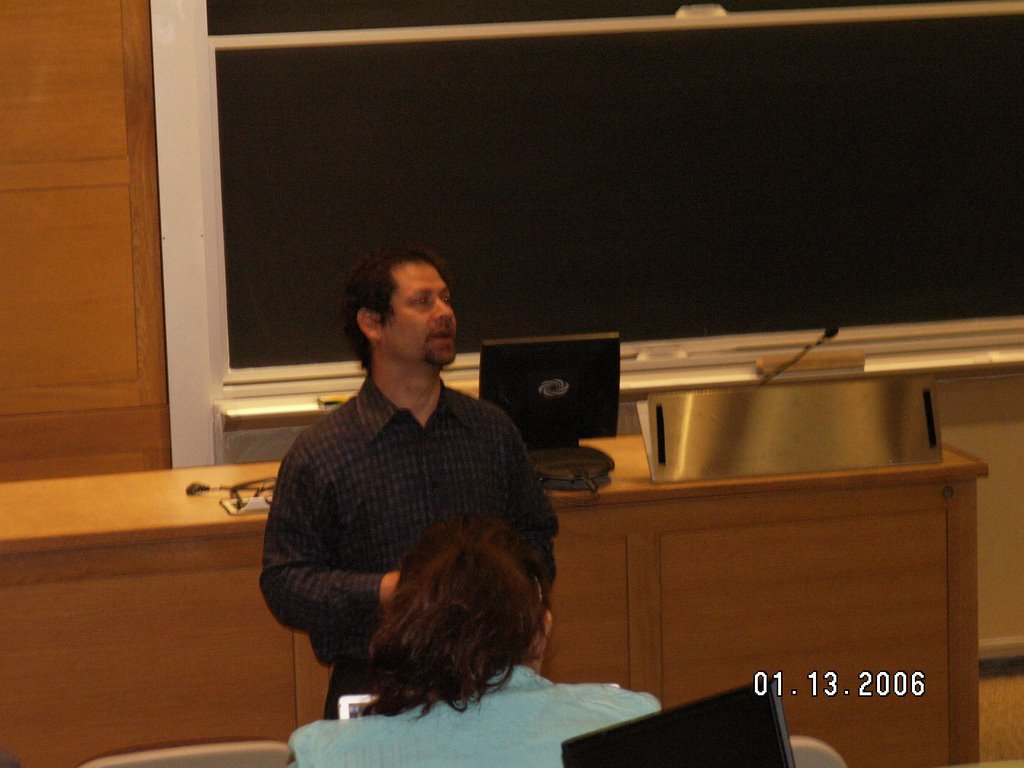
I sincerely apologise that my decision announced on this forum to update on my progress on the NECSI course did not manifest. Unlike many courses of this type that advertises its intensive programme, this was in fact intensive with a Capital I. The phenomenal intellect and energy of Yaneer Bar-Yam was mind expanding but most challenging was his energy as the man went for hours daily without much relenting. I was extremely grateful for the the regular clarifying questions from his father who redefined for me the unique love of father to son. By the end of the event my mind had gone into retreat and so far I restrain any attempt to harvest this feast because it is extremely rich in wisdom and insight.
At the same time there are lenses which have been added or clarified as a result of the event which by the way I seriously recommend to anyone in pursuit of extraordinary insights into the way our world works. The lenses include :
- Patterns and pattern recognition including Power laws
- Multiscale perspectives
-Evolutionary processes
- Goal oriented behaviour
I commend Yaneer Bar-Yam's book Making things work 'Solving complex problems in a complex world' to any serious thinker out there. I am doing my second read and it just packs an exceptional intellectual framework for deep insight into the nature of things.
I continue to harvest because there is an emerging 'holding space' for my own work between the Adaptive Leadership of Dr Hiefetz, the Four Column of Professor Kegan and Lahey, Yaneer Bar-Yam's take on complexity and my life long work on diversity. What is emerging is a book on a Nigerian Renaissance.
Watch this space
Why Oyinbo Ice is colder in Lagos
There are many things about my Nigerian heritage and upbringing that has contributed to my strengths in business transactions in every part of the world in which I have had the good fortune to operate. One of these things is the fact that we are rarely overawed and neither are we usually subservient in our interaction with Europeans or those of European descent. This is unlike many other formerly colonised or enslaved people or so I thought. Like many certainties of my upbringing it is with great concern I watch the fawning faces of Nigerians both elite and masses at the sight of expatriate European ‘competence. I write this, as my fear is that this is becoming a systemic issue that will further entrench misguided notions of white supremacy in ways that will destroy the hunger and will for excellence amongst our people.
Let me state clearly this is not a racial argument but an economic one. I know there is only one Race of people, the Human Race. I also know that all humans that have lived, that are living and that will be born are descended from Africans. I am under no illusion therefore about what the differences that we observe in our skin and is projected in our behaviour is. Simply we are different in cultural terms and our cultures are the resulting accumulation of the wisdom of our ancestors. With that out of the way, it has always been clear to me that most of what passes, as education is a thinly veiled inculcation into European culture and its claim to being a civilising influence. As I grew up I remember that when people complemented my spoken English or the Oyinboness of my nose, my status rose accordingly. I also remember that in many absurd ways we show preference for European culture from calling our languages vernacular, wearing wool suits and ties in the boiling sun and ostracising those who commit grammatical errors in spoken English. I cannot help but note the way the current President of the US mangles the English Language would have made him a pariah in Nigeria long before any misadventure abroad. In fact there were many of life opportunities accorded including girlfriends and court motions on the basis of spoken English rather than any substance involved. However they all seemed just peculiarities even when I had to don a white wig and black gown it was just seemed another level of buffoonery. We are however now exceeding even these seemingly petty examples of what can be termed colonial mentality. Since these are results of borrowed systems and language, they eventually can be adapted or adulterated or end up dotting the landscape like relics.
What we now face is open and abject white supremacy coated in the cloak of economic necessities and masquerading as the purchase of competence. We have somehow in the process of seeking economic survival become a compromised people. In negotiating for material progress it seems we have chosen to bargain away our self-esteem. This is disrespect writ large written in the manner of the many expatriate swagger and adorned in the complementary patronage of their Nigerian hosts. I know this is not completely new. In the 70s we purchased at exorbitant price but masked with the facade of new wealth. It just confirms the Nigerian elites have always been more concerned with short-term economic benefit than any self-respect.
What is new is the power in the swagger of these foreign ‘experts’, their disdain for their hosts and the lack of any accountability or even expectation of good manners. In my experience unlike the many Nigerian talent that ply their trades in distant shores often amongst our most talented and succeeding against great opposition as well as adversity, many of these visiting experts’ are those who are uncompetitive in their own land. They are not chosen in large part for competence but for the simple fact they are white. It is not unusual to watch humiliating treatment of Nigerian staff or direct exclusion of entrepreneurs from choice areas or even business opportunities when possible. They are sequestered out of interaction from the host population and inhabit exclusive clubs, facilities and luxuries. They treat the Nigerian populace like the great unwashed. This is at least a systemic and carefully constructed form of self as well as official segregation.
In recent times I have been asked to specifically headhunt white executives because it opens doors and get results. I am in this case not talking about their competence but their heritage. In all cases these have been educated Nigerians requesting these things. More disturbing is the credibility that comes when a white person says something. I have watched with a sickening feeling as my people brown nose a lesser qualified, inferior opinion or presentation of a white speaker and totally ignore a better contextualised and superior effort of a local. I had a recent experience in which a colleague visiting from the US and joining a conference I help to facilitate suddenly got the unheralded title of expert without uttering one word or contributing any paper. It was her first day in Nigeria, her first introduction to the subject and she was yet to write the first word. In fact after she was crowned and feted as lead expert she now proceeded to ask for guidance on what the subject was about. To be fair to her she tried to correct the impression of all the ‘big men we visited pointedly telling them that I wrote the concept paper and I was the subject matter expert but it was to no avail. She was white and she was all right.
What kind of self-loathing leads one to watch a Nigerian graduate become a labourer and recruit a European of dubious competence into the Executive suite?
In my many years outside Nigeria I built a name fighting for Equality of opportunities and parity of esteem for all human beings. I achieved this I thought because I lacked the chip on my shoulder that many of my colleagues from other African countries as well as the broader black Diaspora suffered from. I claimed to all that I am a success because I had the good fortune of being born to a nation that is not subservient to anyone on the basis of colour or creed. It is my sorry conclusion that this is hubris.
In seeking answers to my observations many say to me I have been blind. It has ever been thus. Others say we live in times of survival and anything goes. But as I read Nigerians exchange insults in the name of political combat and hear them denigrate their nation because of material and organisational shortcomings, I wonder if this is not a pathological self-hatred. Is this not the sign of a form of national psychosis?
The economics is simple we need many jobs for the over 50% of Nigerians under the age of 25 which at conservative estimate is over 60 million. This is more than the population of the United Kingdom entirely. Our economy at best of times grows at about 5% short of twice the rate population increase necessary to start to provide for and address poverty. At the same time we displace any original thinking Nigerian abroad or we whittle them down into conformity with mediocrity. I had the good fortune of being introduced to the work of a Nigerian computer specialist who in the US holds over 400 registered patents through his work on semi-conductors. My host another Nigerian feted abroad as a Genius confirmed my experience and his refusal to subject himself to the doubt of his country folk. No nation can view itself through the eyes of disdain; engage its own people with a practised and perfected discourtesy; kill the fatted cow for many visitors who see this as expected complement of their superiority and expect to reverse a decline.
We have a fight on our hands. This is for the soul of our country and the recognition of Nigerian excellence wherever it comes and whatever gender, ethnicity and qualities it embodies. This is not a rallying call for exclusion of Europeans but a clarion call for meritocracy. Let us recruit the best using agreed standards, open process and job effectiveness. This is a battle everyone must join, for coming generation, the posterity and us. If we can get this right maybe we can welcome talent from all over the world on the basis of mutual respect and added value. That day cannot come too soon to realise oyinbo or adulawo ice is ice.
